Hormones and Surgery: What the Guidelines Actually Say (And What They Don’t)
If you or your patient is scheduled for surgery and takes hormones, whether a birth control pill or menopausal hormone therapy, you’ve likely been told to stop or wait to start. But should you? The answer is more nuanced than a blanket yes, and in many cases, the evidence points in the opposite direction.
ACOG Guidelines:
Combined Hormonal Contraceptives (The Pill, Patch, Ring)
Major surgery with prolonged immobilization
Combined hormonal contraceptives (CHCs) are contraindicated before major surgery when patients are expected to be immobile for an extended period. The concern is real: immobility significantly raises VTE risk, and oral synthetic estrogen and progestins in birth control pills adds to that risk.
If a patient is expected to be up and walking after surgery, however, there is no reason to stop CHCs beforehand.
Minimally invasive and brief procedures
For laparoscopic surgery, tubal sterilization, bilateral salpingo-oophorectomy, and other short procedures, stopping CHCs is not considered necessary. Mechanical thromboprophylaxis, specifically intermittent pneumatic compression, is generally sufficient for most patients undergoing minimally invasive gynecologic surgery.
One important and often overlooked nuance: VTE risk is highest in the first year of CHC use and when restarting after a break of four weeks or longer. If you stop a patient’s pill a month before surgery, you may actually be increasing their risk when they restart postoperatively, not to mention exposing them to the risk of unintended pregnancy in the interim.
Menopausal Hormone Therapy (MHT)
This is where the guideline gap becomes glaring, and frankly, frustrating.
Across major surgical and medical societies, there is a striking absence of specific recommendations on perioperative MHT management. No orthopedic society. No cardiac surgery organization. No general surgery group. None provides a specific directive to stop MHT before surgery.
ACOG is the only major society to address this directly, and its recommendation is individualized decision-making rather than routine discontinuation. The perioperative management of MHT remains one of the most significant gaps in gynecologic and surgical guideline literature. Menopausal women, once again, appear to be a low priority.
What the evidence actually shows
No clinical trials have demonstrated that stopping hormone therapy before surgery reduces postoperative VTE. And yet patients are routinely told to discontinue.
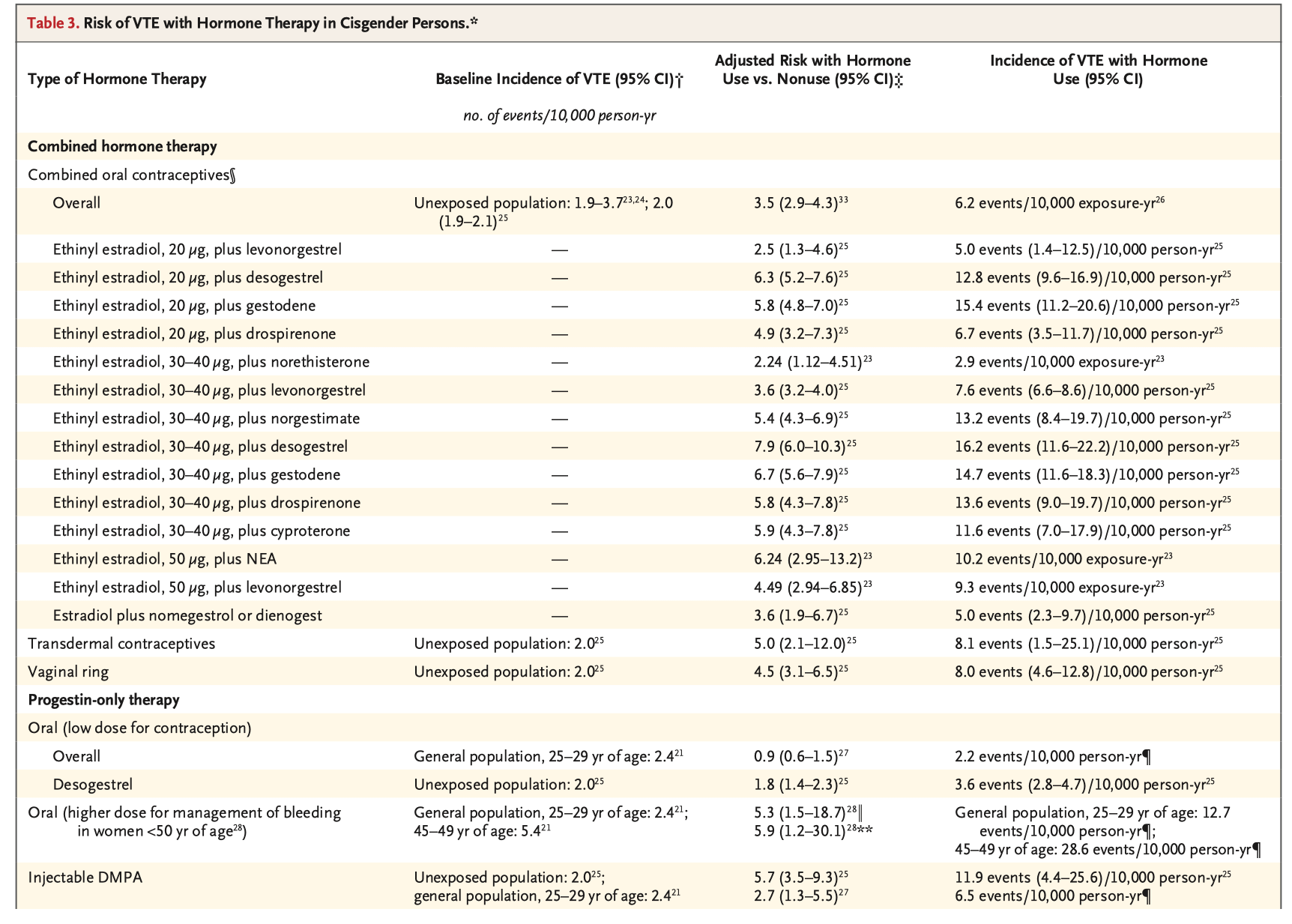
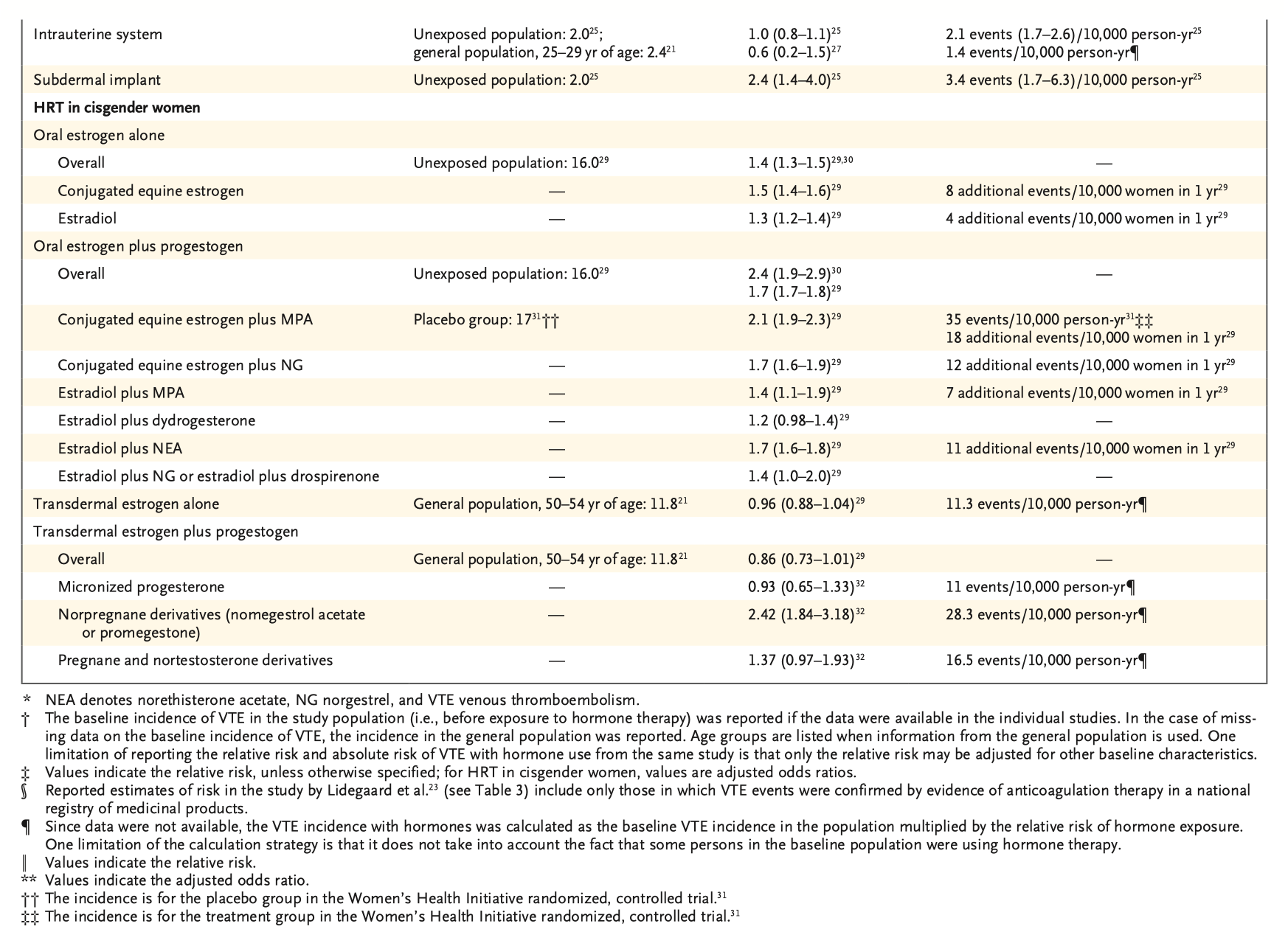
Even with oral estrogen, the absolute risk increase is modest. In the Women’s Health Initiative, combined oral estrogen plus progestin raised VTE risk from 1.7 to 3.5 events per 1,000 person-years. With estrogen alone, the hazard ratio was 1.32, a modest and statistically borderline elevation.
Route of administration matters
Not all estrogen is the same, and this distinction is clinically significant.
Oral estrogen undergoes first-pass hepatic metabolism and raises prothrombotic clotting factors. Transdermal estrogen bypasses the liver entirely, and the data reflect this clearly.
A large UK nested case-control study of over 80,000 VTE cases found that transdermal preparations were not associated with increased VTE risk (adjusted OR 0.93), whereas oral preparations were (adjusted OR 1.58). A meta-analysis of 15 observational studies confirmed that oral estrogen carries a significantly higher VTE risk than transdermal. A 2025 systematic review found that even in women with VTE risk factors, transdermal estrogen conferred no increased risk.
ACOG has specifically acknowledged this distinction, noting that transdermal estrogen has little or no effect on prothrombotic substances and may have beneficial effects on proinflammatory markers.
FDA labeling for transdermal estradiol still recommends discontinuation at least four to six weeks before surgery, associated with an increased risk of thromboembolism. This language predates much of the evidence distinguishing transdermal from oral estrogen. It was written in the era of the WHI, which studied oral conjugated equine estrogen, not patches, and should not be applied uncritically to modern transdermal formulations.
The bottom line on perioperative MHT:
The citation below is the best up to date review:
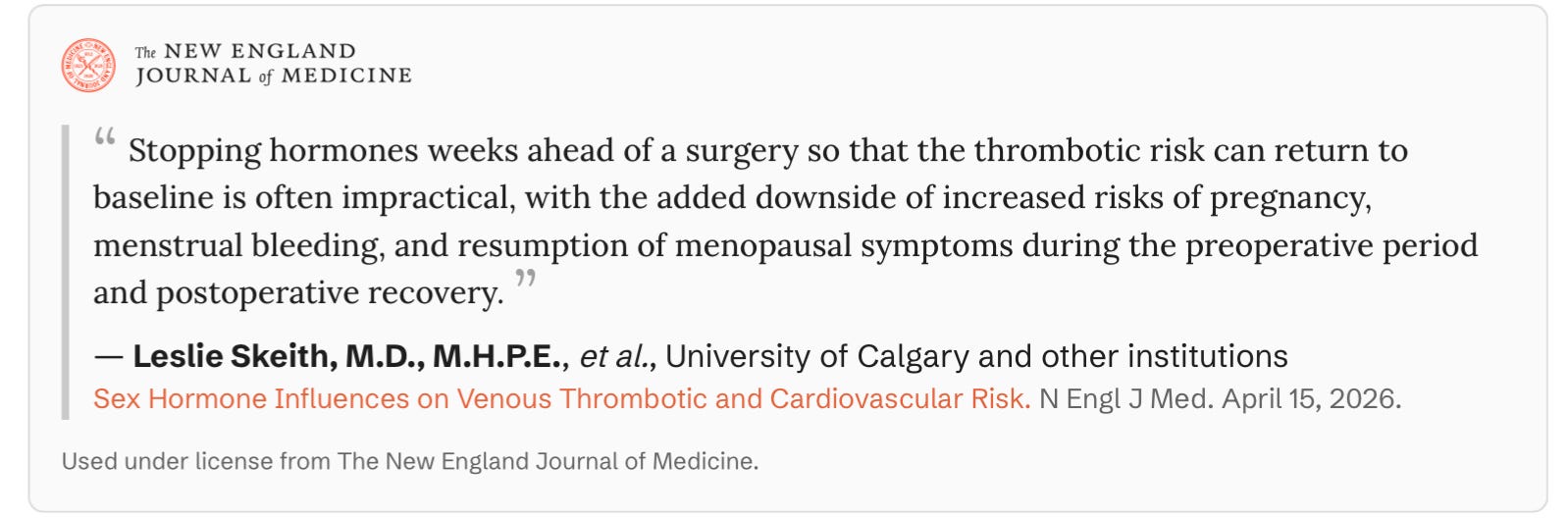
The trend in evidence and expert opinion, including the 2026 NEJM review by Skeith and Bates, favors continuing MHT with appropriate thromboprophylaxis rather than routine discontinuation. They state:
“Critically, no increase in thrombotic risk is apparent with nonoral (transdermal) estradiol when used alone. When combined with transdermal estrogen, micronized progesterone and most pregnane progestogens do not appear to carry a thrombotic risk. “
Shared decision-making should weigh each patient’s individual VTE risk factors against the real costs of stopping: return of vasomotor symptoms, sleep disruption, mood changes, and, for some women, significant quality-of-life regression during a period when they need to be recovering!
Starting HRT After Risk-Reducing Surgery: When Can She Begin?
For premenopausal women, particularly BRCA carriers, who undergo risk-reducing salpingo-oophorectomy (RRSO), a separate but equally important question arises: when can hormone therapy start?
The short answer is immediately, or as soon as she is ready.
If anyone is telling you to wait for 3-6 weeks or longer- ask them, “ What are you afraid of, and what it the data you are referring too?” And then show them these references here.
What the guidelines say:
No major guideline, not ACOG, NCCN, NAMS, SGO, ESHRE, or RCOG, recommends a waiting period of six to twelve weeks before starting HRT after RRSO. This practice appears to be based on a misapplication of the CHC perioperative recommendation, which addresses a fundamentally different clinical scenario.
The NCCN is explicit: HRT is an important consideration for premenopausal patients after RRSO who do not have a personal history of breast cancer. Premature surgical menopause causes an abrupt estrogen drop, more severe than natural menopause, with documented detriments to bone, cardiovascular, neurologic, sexual, and psychological health. The NCCN recommends a preoperative menopause consultation when possible and states that HRT is generally not contraindicated in this population.
Why the 4 to 6 week CHC rule does not apply here
The recommendation to stop CHCs before major surgery exists because oral ethinyl estradiol in combined pills elevates clotting factors, specifically factor VII, factor X, and fibrinogen, and time is needed for normalization before surgery.
After RRSO, the clinical situation is the opposite. The question is not how to reduce hormone exposure before surgery, but how quickly to restore it in a patient who is now acutely estrogen-deficient. Transdermal estradiol avoids first-pass hepatic metabolism entirely and does not carry the prothrombotic effects of oral ethinyl estradiol. There is no pharmacologic rationale for a waiting period.
Practically speaking
For a laparoscopic risk reducing surgery in a healthy woman in her 40s, a minimally invasive procedure with a VTE risk under 0.2%, early ambulation, and same-day or next-day discharge, the case for delaying transdermal estradiol is particularly weak. Starting the patch on postoperative day 0 or 1 is a reasonable, evidence-supported approach.
Imposing an arbitrary six to twelve week delay compounds the harm of surgical menopause. Severe vasomotor symptoms, sleep disruption, and mood changes are known consequences of acute estrogen withdrawal, and they should not be inflicted on women who are already recovering from surgery.
The practice of mandating a waiting period before starting HRT after ovary removal is not supported by any published guideline or clinical evidence. It is time to stop doing it.
References
Hurbanek JG, Jaffer AK, Morra N, Karafa M, Brotman DJ. Postmenopausal hormone replacement and venous thromboembolism following hip and knee arthroplasty. Thrombosis and Haemostasis. 2004.
Committee on Gynecologic Practice. ACOG Committee Opinion No. 556: Postmenopausal estrogen therapy: route of administration and risk of venous thromboembolism. Obstetrics and Gynecology. 2013.
Mohammed K, Abu Dabrh AM, Benkhadra K, et al. Oral vs transdermal estrogen therapy and vascular events: a systematic review and meta-analysis. The Journal of Clinical Endocrinology and Metabolism. 2015.
Committee on Gynecologic Practice. ACOG Committee Opinion No. 750: Perioperative pathways: enhanced recovery after surgery. Obstetrics and Gynecology. 2018.
Vinogradova Y, Coupland C, Hippisley-Cox J. Use of hormone replacement therapy and risk of venous thromboembolism: nested case-control studies using the QResearch and CPRD databases. BMJ. 2019.
Committee on Practice Bulletins—Gynecology. Prevention of venous thromboembolism in gynecologic surgery: ACOG Practice Bulletin, Number 232. Obstetrics and Gynecology. 2021.
Pfeifer KJ, Selzer A, Mendez CE, et al. Preoperative management of endocrine, hormonal, and urologic medications: SPAQI Consensus Statement. Mayo Clinic Proceedings. 2021.
Hillis LD, Smith PK, Anderson JL, et al. 2011 ACCF/AHA guideline for coronary artery bypass graft surgery. Journal of the American College of Cardiology. 2011.
Abouharb ALZ, Mehta S, Rathnayake H, Pandit H. Withholding of hormone replacement therapy prior to total joint arthroplasty surgery: is it justified? A systematic review. The Journal of Arthroplasty. 2024.
Zhao S, Kelly M, Smith S, et al. Estrogen replacement therapy decreases associated risk of postoperative venous thromboembolism and medical complications after total joint arthroplasty. The Journal of Arthroplasty. 2025.
Hicks A, Robson D, Tellis B, Smith S, Dunkley S, Baber R. Safety of menopause hormone therapy in postmenopausal women at higher risk of venous thromboembolism: a systematic review. Climacteric.2025;28(5):497–509.